Why Do Some Roses Smell So Good?
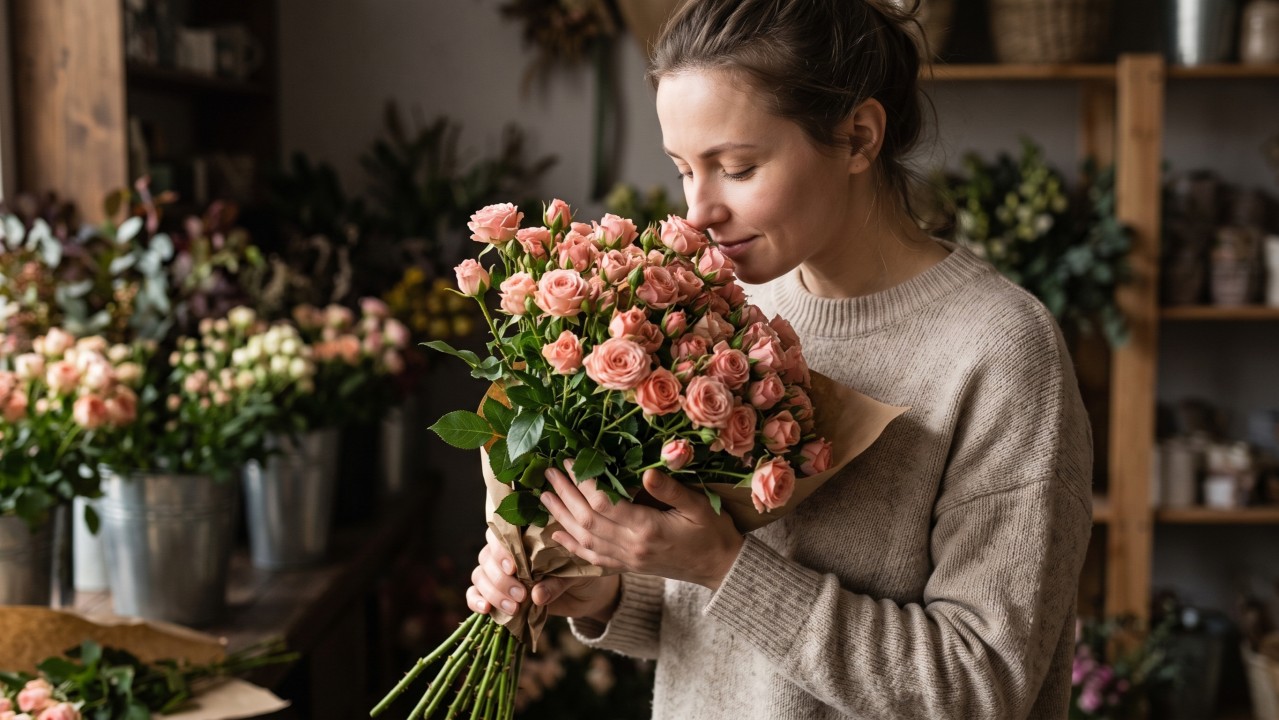
You know that moment when you pick up a rose, instinctively bring her towards your nose and hope for something wonderful?
Sometimes you are rewarded with the most incredible fragrance. Other times, absolutely nothing. Beautiful, yes. Fragrant? Not so much.
So, what gives a rose her scent, why are some varieties far more fragrant than others, and why might a spray rose smell completely different after a little time in the vase?
Let’s take a closer look.

What Creates Rose Fragrance?
Rose fragrance comes from a complex mixture of natural aromatic compounds released from the petals.
Compounds including geraniol, citronellol and nerol contribute to many of the classic rose notes we recognise. Other compounds can introduce fruity, citrus, spicy, green or woody characteristics.
It is not one single ingredient creating the fragrance. Each variety produces its own combination, which is why one rose might smell sweet and powdery while another is fresh, citrusy or almost spicy.
Think less “one rose perfume” and more an entire fragrance wardrobe.
It Begins with Genetics
A rose’s fragrance is largely determined by genetics. Breeders select roses for many different qualities, including colour, shape, stem strength, vase life, disease resistance and fragrance. Creating a variety that delivers everything at once is no small task, and the breeding and trialling process can take many years.
Some varieties are naturally rich in fragrance, while others have been bred to prioritise different characteristics. This is why two roses that look remarkably similar can offer completely different scent experiences.
It is also why choosing a rose only from a photograph can never tell you the whole story.

Growing Conditions Matter Too
Genetics may provide the fragrance potential, but growing conditions can influence how that fragrance develops.
Temperature, light, humidity, soil and the location in which a rose is grown can all play a part. Even the same variety grown in two different regions may show subtle differences in colour, head size and scent.
This is one of the reasons we find roses so fascinating. They are not identical products rolling off a factory line. Growing conditions leave their own little signature on every stem.
Give Cold Roses a Moment
If your roses arrive directly from a refrigerated truck or cold store and seem to have very little fragrance, do not panic.
The cold chain is essential for protecting cut flowers during transport, but lower temperatures can also reduce the release of the compounds responsible for scent. In simple terms, a very cold rose will almost always have little or no scent.
Condition the stems correctly, place them in clean water and allow the flowers to warm gradually and begin opening. As the petals develop and reach room temperature, the fragrance may become far more noticeable.
Basically, do not judge a rose the second she comes out of the box. She has travelled a long way and may need a minute.
Does the Time of Day Make a Difference?
Rose fragrance can change in strength throughout the day.
Temperature and humidity affect how quickly aromatic compounds are released into the air, so a rose may appear more fragrant in a warm room than in a cool one. The stage of opening matters too, with the scent often becoming easier to appreciate as the bloom develops.
If you are comparing fragrant varieties, try smelling them at different stages rather than making your decision on day one. And yes, we fully support repeated rose sniffing in the name of research.

Why Scent Feels So Personal
Rose fragrance is not only about chemistry.
Our sense of smell is closely connected to memory and emotion. A particular rose may remind someone of a grandmother’s garden, a wedding bouquet, a childhood home or a person they love.
This is why fragrance can feel so individual. One person may describe a rose as comforting and nostalgic, while someone else finds the same scent fresh, uplifting or romantic.
There is no entirely right answer. That is part of the joy.
And What About Spray Roses?
Spray roses offer a wonderfully varied world of colour, form and, in some varieties, fragrance.
With several flowers and buds on every stem, the blooms open at slightly different stages. This creates texture and movement, but it can also mean the scent experience develops over time as more flowers open.
Not every spray rose is highly fragrant, and appearance alone is not a reliable guide. If scent is important for a wedding, event or design, speak to your grower or supplier and ask which varieties they recommend.
Stop and Smell the Roses
A rose’s fragrance is created through a rather extraordinary combination of genetics, chemistry, growing conditions, temperature and timing.
So, the next time your roses arrive cold and seem a little shy in the scent department, give them a little time. Then go back for another sniff.
It may be a tough job, but somebody has to do it.