The Art Of Wiring And Why Traditional Floristry Skills Still Matter
Timeless Skills, Modern Flowers
If you’ve spent any time looking at this year’s wedding flowers, you might have noticed something. Bridal designs continue to become softer, more natural, and full of movement. Trailing bouquets, delicate buttonholes, and elegant corsages all feel beautifully effortless.
But every florist knows that effortlessness rarely happens by accident. Behind many of today’s most beautiful wedding flowers lies one of floristry’s oldest skills: wiring.
Before anyone imagines every stem wrapped in wire and tape, that’s not what we’re talking about. Modern florists use wiring with precision, adding support only where it’s needed to create movement, position a bloom perfectly or strengthen a delicate stem without anyone ever noticing.
As couples continue to favour flowers that feel natural and individual, these traditional techniques are quietly enjoying a well-deserved revival.

Meet the Floristry Geek
To find out why these skills remain so important, we caught up with someone who is passionate about keeping them alive: Viv, founder of The Floristry Geek Facebook community and owner of Mrs. Bee’s Flower Company in Stamford, Lincolnshire.
Viv’s journey began when she was just seven years old. “I first went to work with my Auntie Queenie,” she says. “She taught me to make carnation buttonholes wrapped in silver foil paper.”
That first lesson sparked a career spanning almost four decades. After training in Germany and continuing her education with some exceptional florists, Viv now creates wedding, funeral, and event flowers while also running The Floristry Geek.
When asked about The Geeks (the name her community has fondly been nicknamed), “The goal was always to build a community that people valued,” she explains. “A safe space for trained florists and students to share, celebrate, and commiserate.”
This year, the Geeks are even planning their first in-person get-together, bringing that sense of community from our screens to the workbench.

Not Forgetting Wearable Flowers
For most florists, the word wiring immediately brings to mind buttonholes. They may be one of the smallest pieces we create, but they’re also among the most technical, relying on careful wiring and taping to ensure they stay looking perfect throughout a long wedding day.
It feels rather fitting, then, that one of Viv’s very first floristry lessons was making carnation buttonholes with her Auntie Queenie. Decades later, those same techniques are still an essential part of modern floristry.

From buttonholes and corsages to flower crowns and other wearable flowers, good wiring allows the mechanics to disappear completely. A beautifully made buttonhole will sit perfectly on a lapel; a corsage needs to be secure, comfortable, and elegant from every angle, while a flower crown requires careful construction to remain lightweight, flexible, and comfortable enough to wear for hours.
We’re all here for flower crowns, aren’t we? While they may still be more at home at weddings and festivals than on the weekly supermarket shop, we’d certainly love to see them become part of everyday life. A girl can dream.

Creating Movement
Trailing bouquets are another perfect example. One of the biggest bridal trends we’re seeing is a return to bouquets that feel loose, romantic and full of movement. They appear almost as though they’ve been gathered from an abundant summer garden.
Creating that look takes skill.
Often, it’s only a handful of flowers that are wired. A single bloom might be repositioned to extend a trail, soften an edge or create balance within the design. It’s these subtle mechanics that make a bouquet look effortless.
Perhaps that’s why more florists are becoming fascinated by the craft behind the flowers. Social media allows us to admire incredible designs from around the world, but increasingly we’re asking not just “What flowers did they use?” but “How did they create that?”

Why Spray Roses Work So Beautifully
This is where spray roses really come into their own.
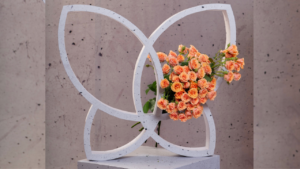
Their branching stems, multiple blooms, and naturally delicate proportions make them incredibly versatile. They bring movement without unnecessary weight, making them ideal for trailing bouquets, buttonholes, and corsages alike.
Whether they’re softening the edge of a bouquet or adding a perfectly placed bloom to a wearable design, spray roses have a way of looking completely natural.
Ask Viv if she has a favourite variety and she laughs. “It would be like having a favourite child… but I do love Flinders Lane.”We can’t blame her, such a stunning and unusual rose.

Timeless Skills
Floristry will always evolve. Trends will come and go, and bouquet styles will continue to change. But beautiful flowers have always relied on great craftsmanship.
Perhaps that’s the real story here. Wiring isn’t making a comeback because it never disappeared. Instead, a new generation of florists is rediscovering the value of traditional techniques and using them to create fresh, contemporary designs.
Sometimes, the oldest skills are exactly what modern floristry needs.